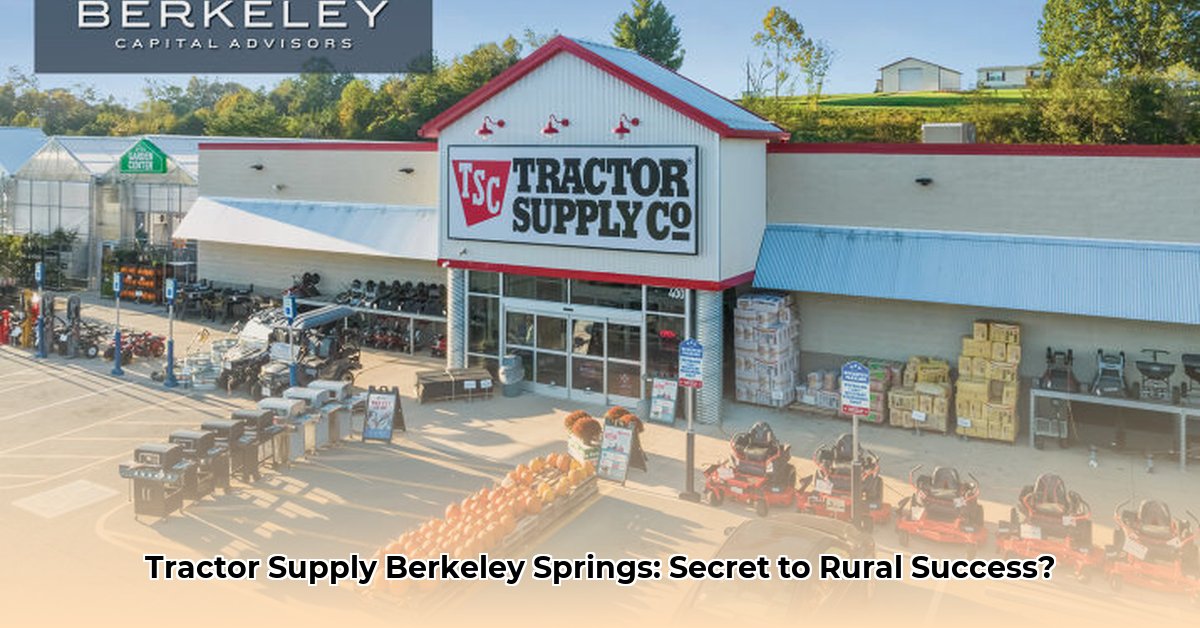
Tractor Supply Company's Berkeley Springs, West Virginia location stands as a compelling case study in the success of rural retail. This article analyzes its operational strategies, competitive advantages, and challenges, highlighting its role within the broader rural economy. We examine how this store serves its community, adapting to the unique demands of a dispersed population and the growing influence of e-commerce. For comparison, see the success of another rural location here.
Location and Market Analysis: A Strategic Rural Hub
Tractor Supply's Berkeley Springs store enjoys a strategic location near major crossroads, making it easily accessible to residents of several smaller towns including Great Cacapon, Little Orleans, and Hedgesville. This accessibility is a crucial advantage in a rural area where distances between communities are significant. This central location transforms the store into a vital supply hub for the region. The demographics of the area are largely rural, with a significant portion of the population engaged in agriculture, farming, or related industries. This directly aligns with Tractor Supply's product offerings, creating a clear market fit. The competitive landscape includes smaller local hardware stores and feed suppliers, as well as the ever-present threat of online retailers like Amazon and rural-focused e-commerce platforms. Does this potent combination of accessibility and targeted product selection translate into concrete success? The evidence strongly suggests it does.
Product Offerings and Services: Beyond the Tractor
Tractor Supply's success stems from its expansive product range. It functions as a one-stop shop for rural residents, extending far beyond farm equipment. The store stocks livestock feed, fencing supplies, hardware, pet supplies, clothing, and even home goods – a diverse selection designed to cater to the multifaceted needs of its customer base. This broad selection reduces the need for customers to travel to multiple locations, enhancing convenience and solidifying customer loyalty. This diversified inventory is a significant competitive advantage in a rural area where travel time and distance are significant barriers to shopping.
Operational Efficiency: Tailored to Rural Needs
The store's extended operational hours are meticulously tailored to the schedules of its predominantly rural clientele. Farmers and ranchers often work long, irregular hours, and Tractor Supply's extended availability ensures convenient access to necessary supplies. Moreover, the store maintains a well-staffed workforce to provide efficient and knowledgeable customer service. This commitment to staffing levels, despite the challenges of recruiting and retaining employees in rural areas, signals a strategic investment in customer satisfaction. However, maintaining consistent staffing and inventory levels amidst potential supply chain disruptions remains an ongoing challenge. How does the store manage these challenges? Their success suggests they've found effective solutions.
Success Factors: A Multifaceted Approach
Tractor Supply's success in Berkeley Springs is not attributable to a single factor, but rather a combination of strategic choices. The store's prominent location, diverse product selection perfectly catering to rural lifestyles, and extended operational hours all contribute to its dominance in the market. Beyond product and logistics, community engagement likely plays a significant role. While precise data is unavailable, it is highly plausible that the company participates in local events, sponsors community initiatives, and builds relationships with local farmers and ranchers, creating a strong sense of belonging and customer loyalty. These actions transform the store from a simple retailer into a community asset.
Challenges and Risks: Navigating a Complex Landscape
While Tractor Supply enjoys considerable success, certain challenges must be addressed for continued viability. A detailed risk assessment matrix helps visualize these potentials:
| Risk Factor | Likelihood | Impact | Mitigation Strategy |
|---|---|---|---|
| Increased online competition | Medium | High | Enhanced online presence, robust delivery/pickup options, loyalty programs. |
| Supply chain disruptions | Medium | High | Diversified suppliers, strategic partnerships, robust inventory management. |
| Economic downturns | Low | Medium | Cost-effective strategies, competitive pricing, flexible financing options. |
| Regulatory compliance | Low | Medium | Dedicated compliance officer, proactive legal counsel. |
Conclusion: A Rural Retail Model for Success
Tractor Supply's Berkeley Springs location serves as a successful example of how to adapt retail strategies to a rural context. Its success is a testament to thoughtful planning, meticulous execution, and a deep understanding of its customer base's unique needs. The store's strategic location, broad product selection, extended hours of operation, and likely strong community engagement represent key strengths. While online competition and economic fluctuations pose ongoing challenges, Tractor Supply’s apparent ability to adapt and innovate suggests positive long-term prospects. Further research could focus on quantifying the impact of community engagement and measuring customer loyalty to better understand the full extent of the store's success. By addressing the challenges and building upon established strategies, Tractor Supply is poised for continued growth and relevance within its served community.